
Want to get caught up? Check out the rest of the posts below!
Introduction
Opening Day
The Villainous Leopard
The Courageous Lions
Lion Love
Well you hopefully the introduction and came back for more so I’m assuming I have you in the crushing grips of a tantalising narrative and it’s up to this post to keep you hooked. Don’t worry, it’s a good one.
Reminder: I live in Sydney, which is famous for, among other things, being quite a distance away from Africa. Fortunately, just about every oneworld airline flies to Sydney so I had my pick of the litter to get to Africa. I went with the tried and true Qatar QSuites for the long flight to the Middle East before connecting to Africa. I’ve previously reviewed the QSuites in absurd levels of detail so I’ll share just a few pictures here, but suffice it to say it was a great flight to Doha and then onward (in non-QSuites, boo) for the quick 5-hour flight to Nairobi.
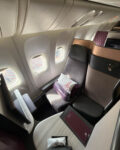

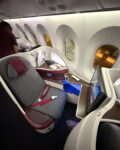
I arrived the day before our workshop was to begin, just to have the day to recover a bit and adjust to jet lag. Being a bit fancy, I chose Hemingways Hotel Nairobi, an absurdly nice resort in the Karen neighbourhood of Nairobi that is basically the best of the best. Why did I book there? Well, my flight into Nairobi landed very early in the morning and I figured, since I had booked the hotel through my buddy Spencer, that I had a better chance for an earlier check-in.

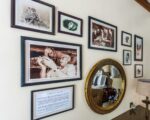

The Hemingways Hotel was absolutely beautiful and I enjoyed a thorough bit of relaxation and recovery before our workshop began (including some quick Ubers to a shopping centre for items I forgot to pack).
Finally, it was time to meet the workshop group. I made my way to the official hotel before we all went on an incredible side quest, which I will write about separately. It was a diverse group, from pro-level bird photographers to iPhonetographers. We had the following roster:
- Kate, our leader and designated Expensive Lens Dropper
- Our lead African guide, Hilary (we would meet our other guide, Tim, the next day)
- A British couple who lived in Australia, working in the medical field, who were some of the most sincere and entertaining people I’ve ever met
- Two ladies from America, one of whom is married to one of my best friends on Instagram and the other is the sister of that same best friend on Instagram
- An Aussie wildlife guide from Far North Queensland who was an absolute encyclopedia of animal knowledge, not only knowing what every animal was called but also their hobbies and favorite music
- A British bloke from Birmingham with a passion for birds and bird photography who had such a classic British sense of humor
- A Kiwi doctor from Tasmania, whom I knew from a previous workshop, and who also helped me when I randomly slipped and broke my arm a few months ago
- And a semi-obnoxious American from Sydney, yours truly 🙂
From the beginning, I could tell it was a special group of wonderful people. Some people had goals about which animals they wanted to see, and others (like me) just kind of showed up, trusting that Kate and Hilary knew their stuff and we’d see plenty of amazing animals (we would). I really just wanted to see one animal though, for an immature and kind of hilarious reason. Aside from that, I figured it would be cool to see a tiger or two (on that note, guess who spent 40+ years on this planet without knowing that tigers aren’t in Africa, much to the delight and good-natured ridicule of the rest of the group?).
Beyond that, it was just good to get to know everyone. Bruce Tuckman calls the stages of group development Forming, Storming, Norming, Performing. I really felt like we skipped the middle two and were fast friends with each other almost immediately. We had a great dinner at the hotel in Nairobi and then had a quick sleep, excited for what was to come the next day!
Let’s go on a safari
I’m a bit of a nerd, so I looked up what the word ‘safari’ actually meant. These days, of course, the meaning is something along the lines of “middle- to old-aged people in trucks looking at animals with huge camera lenses and wearing varying versions of beige clothing”, but originally the word comes from Swahili, where it simply means “journey”. I like that definition a bit more. I was excited to see what this journey would have for me, the things I would like, the things I wouldn’t like, all among newfound friends from around the world.
So where did we begin? Logically, back at an airport. But not the big Jomo Kenyatta International Airport. We went to an older airport called Wilson Airport, from where most of the flights out to safari camps originate. My first thought was “I’ve never seen so many people dressed in beige-colored clothing in my life”. It was a small but perfectly nice airport, with a couple of cafes for people who needed a refill on their coffee. We caffeinated ourselves and awaited our plane to head into the bush.
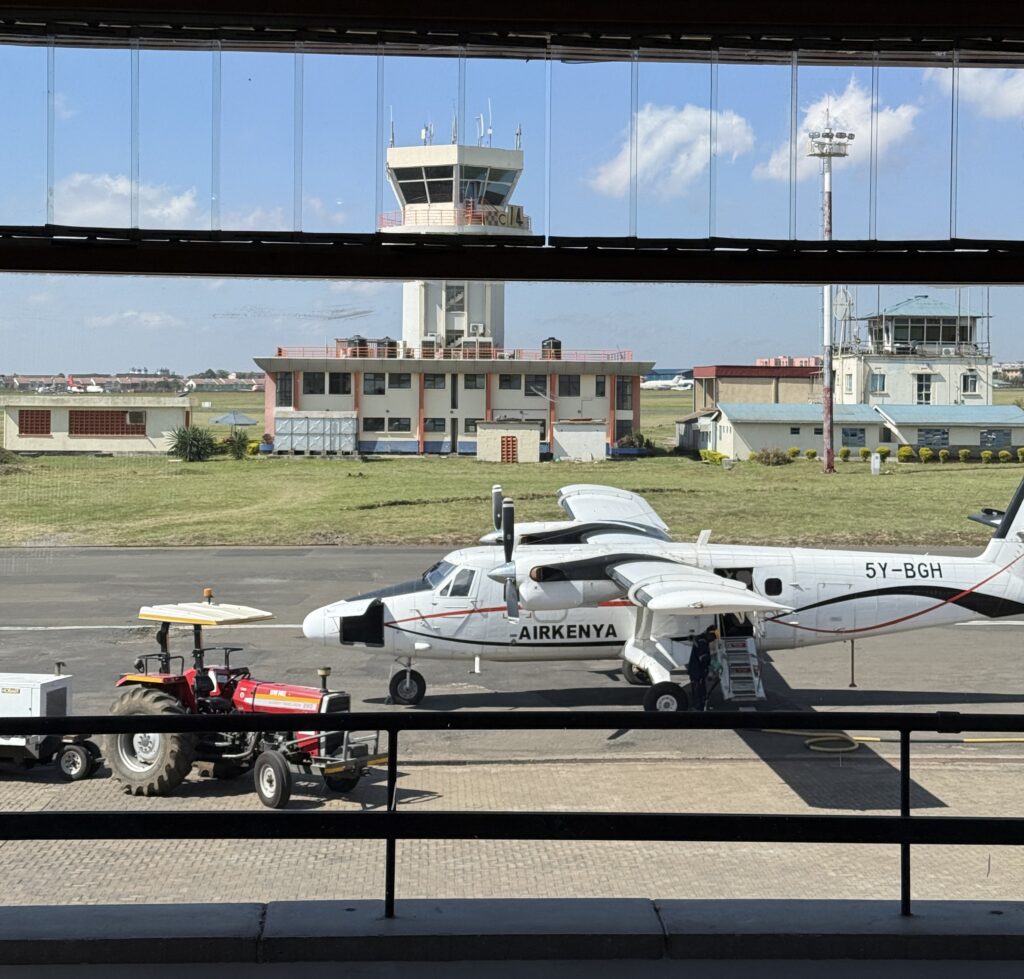
There was a steady flow of planes coming in, picking up beige-clothed passengers and departing. Before too long it was our turn. We hopped into our Airkenya Twin Otter and took off. The initial part of the flight was over a nice green landscape, much different than the arid plains I had imagined.
But then we found the more arid landscapes.
I was expecting an empty savannah and not as many hills and mountains, but that’s more in southern Kenya, whereas we were heading to the north, to a less-visited area called Samburu. We came in for about as smooth of a landing as you would expect for an unpaved runway.
We unloaded our carry-on bags and saw a phalanx of safari trucks ready for our arrival. Little did I know that seeing flocks of safari trucks would almost be a more familiar sight than animals by the end of the trip!
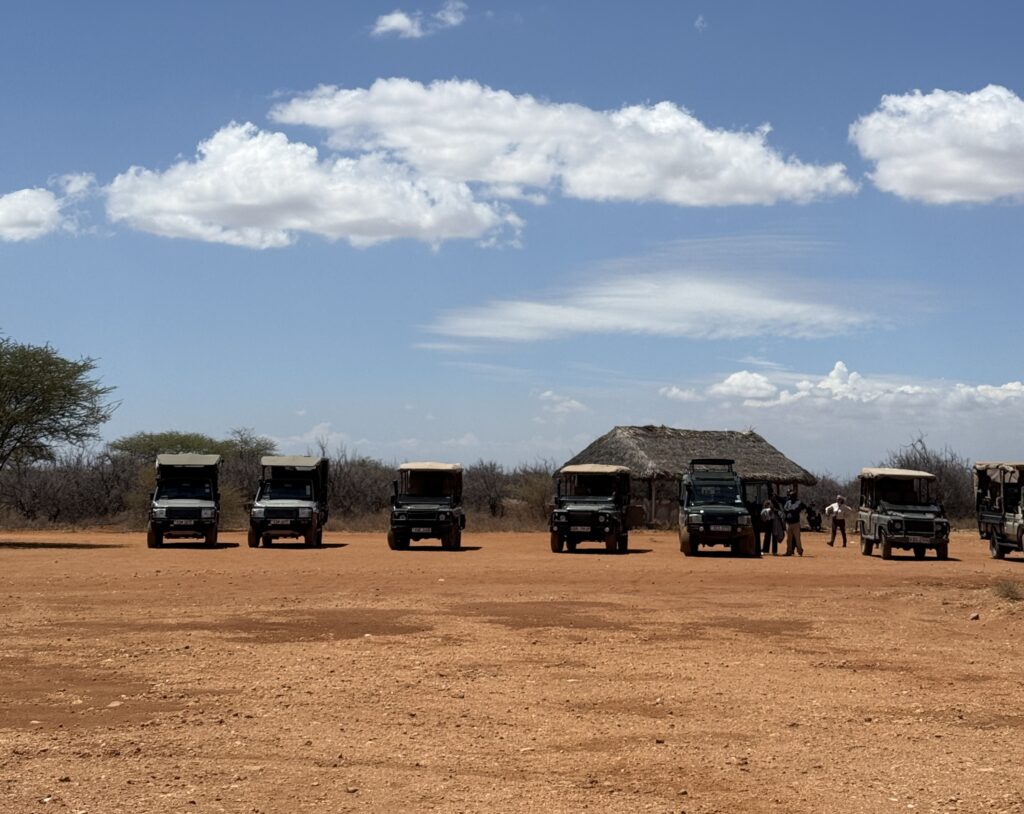
We were warmly greeted by guides from our lodge, who greeted us with water and let us know that we had about an hour’s drive to the lodge. Kate told us to have cameras at the ready, since we would be seeing some wildlife on the way to the lodge!
We (ok, mainly me) paused briefly to watch our plane take off.
…and, after flying 10,000 miles, paying the most I’ve ever paid for a vacation, packing all the beige-colored clothes I owned, and bringing the best photography gear I could find, it was finally time to go on a safari!
Opening Day
The beginning of April marks the first baseball games of the season in Major League Baseball in the USA. At the beginning of a long season, the weather is usually good, the sun is hopefully shining, and, even though you’ve seen baseball before, every pitch feels new and significant. Everyone gets excited and has a great time for Opening Day.
Our ride to our first lodge were like Opening Day for our trip. Everything seemed new and interesting. The first part of the drive was on a highway through villages where children would wave to us (we were not particularly hard to spot) with some of the biggest smiles I’ve ever seen in my life. We passed hordes of camels on their way to market, checkpoints, and finally we turned into our first park! It took about 15 minutes for the paperwork and park fees to get sorted, and then, just like that, we were on safari for the next 10 days!
We set out on a bumpy dirt path, a hodge-podge group of eager photographers from around the world in search of Kenya’s living treasures. Samburu is specifically known for five species endemic to the area: the Grevy’s Zebra, the reticulated giraffe, the Somali Ostrich, the Oryx, and an animal whose name I could never remember and called Ragnarok the whole time, to everyone’s bewilderment (it’s actually called a Gerenuk).
Looking through the eyepiece of my Sony a1II through the 100-400mm GM lens, I felt ready. I knew how to get the absolute best out of all this camera gear I’ve acquired over the years and was ready to test it in a photography environment that is ever-changing and incredibly challenging. I was in the middle of that big philosophical soliloquy when we came upon an idyllic view: two reticulated giraffes, their necks crossed in beautiful symmetry.
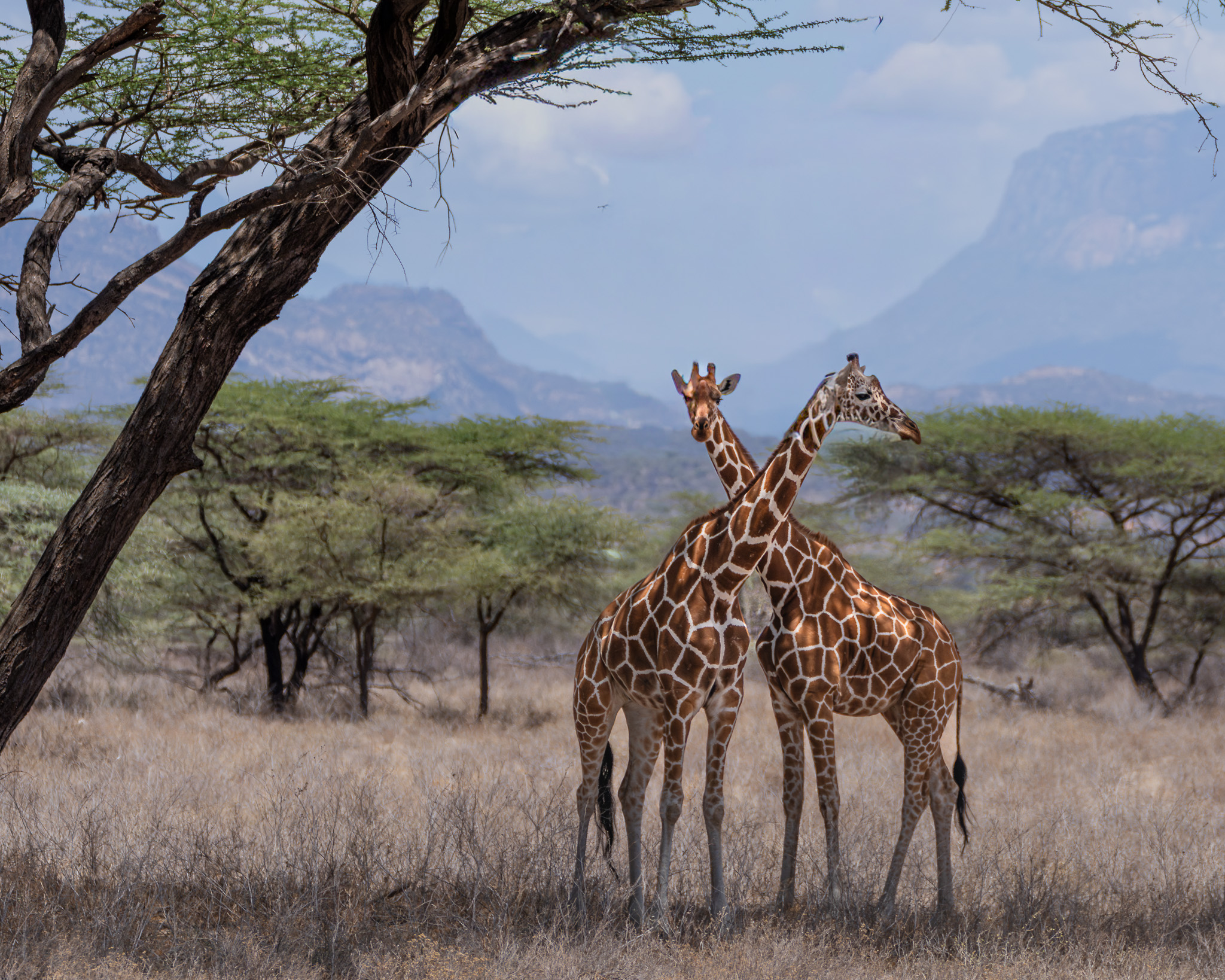
I laughed. Literally the first animals we saw were one of the Samburu Big Five and they lovingly arranged themselves perfectly for us with beautiful hilltops in the background.
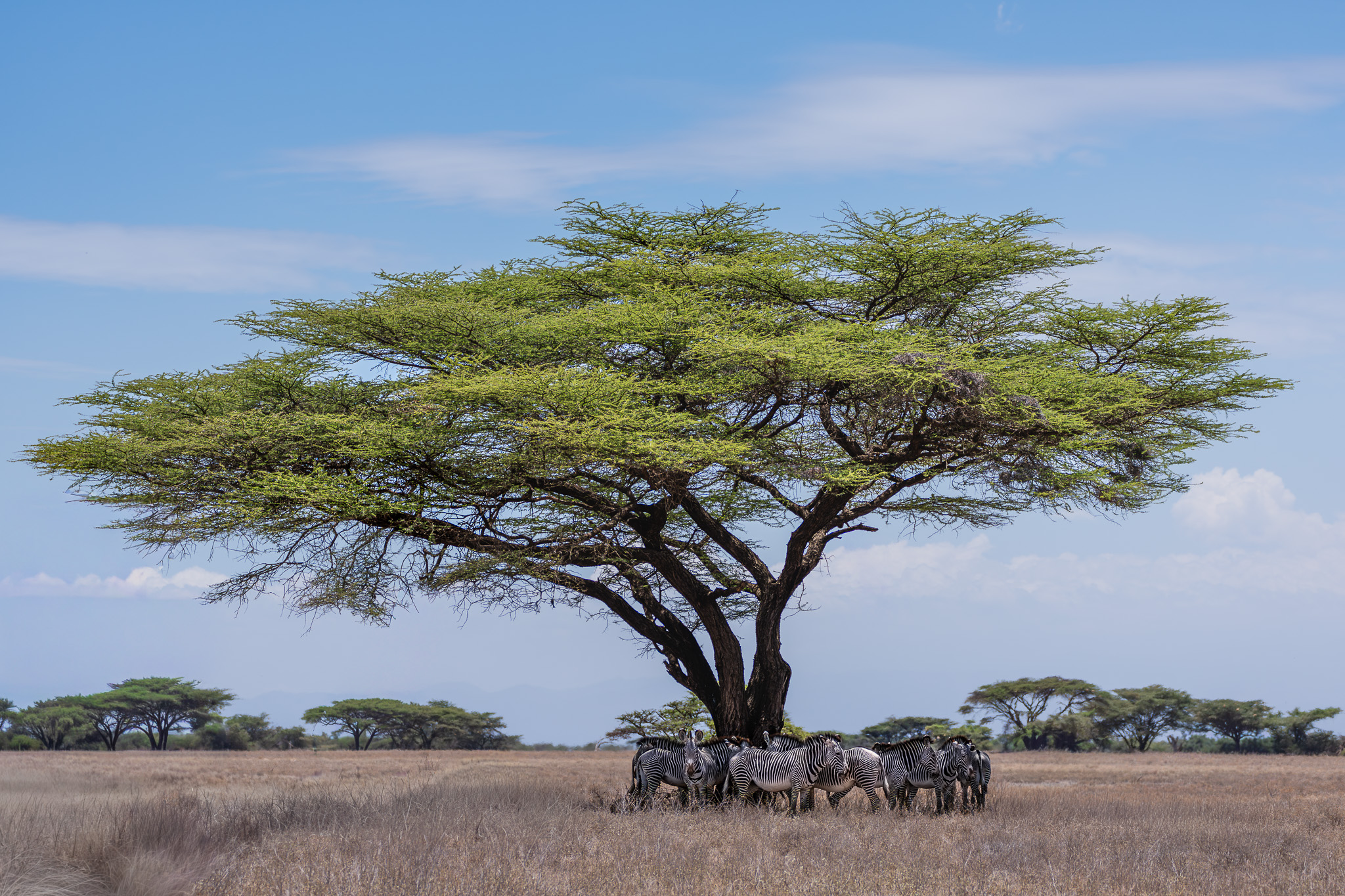
It wasn’t too long before we encountered our first dazzle of Grevy’s Zebras, distinctive for their white bellies where their stripes stop instead of more typical zebras where the stripes go around the entire body.
(also, a quick note: I think most animal grouping names, like a group of sloths being called a snuggle, are fairly ridiculous, so do not be surprised if I just make up my own)
Part of being a good wildlife photographer is learning about the behavior of the animals you want to photograph, which makes it much easier to spot them out in the wild. These zebras were doing largely the same thing we were doing: trying to stay out of the midday sun. I made notes to myself to see if it could make me a better animal spotter.
We crept along, making decent time to our lodge, seeing four out of the Samburu Five: the giraffe, the zebra, the Ragnarok, and the Oryx. The only one we lacked by the time we made it to our lodge was the ostrich. Good trip y’all, let’s pack it up! Haha, not a chance.
After checking into our incredible lodge and having a great first meal where we enjoyed our starters along with the rest of the food, our guides arrived from Nairobi with the rest of our bags. We took about 30 minutes to get settled into our rooms and collect the rest of our camera gear…and then got right back into our trucks for our first official game drive!
Anatomy of a Game Drive
Ok so what is a game drive? Well, you drive around and play games. Ok not really. Well, unless the game is Spot the Animal I guess.
Game drives are where you see most of the wildlife. You pile into game trucks, usually some version of a Toyota Land Cruiser, and guides will drive you out into the parks to search out the animals and observe them in their natural habitat. Like I mentioned in the introduction post, there are two different styles of game drives: using the guides from the lodge you stay at, or having the same guides with you throughout your trip, even if you go to a few different regions around Kenya/Tanzania (the lodges have guide accommodations). I may be a bit biased, but we had the best guides in Kenya and I was so happy they stayed with us the entire time.
Safari trucks come in a wide variety of setups. Usually there are 3 rows of seats for guests with various types of setups: some will have one side of seats removed and put down a mattress for better viewing angles of the animals for photography (usually photographers will want to be as low to the ground as possible), and still others have little trap doors at the floor level that swing open. They will almost all have either a pop-up roof or big sunroof, in case people need to stand. You’ll see just about every permutation imaginable out in the bush. If you’re planning a trip, make sure that you have a good understanding of the type of experience you want and work with your tour provider to ensure they can meet that. I was incredibly happy with our setup.
Most game drives are in the morning and evening, around dawn and dusk, when the animals are more active. We took a more aggressive schedule, staying out longer so we would have more chances to see wildlife and have them to ourselves.
A quick note about the quantity of safari trucks and how the animals react
It took me quite a while to adjust to the quantity of safari trucks I saw out there. Our guides reminded me that these wild animals have grown up around safari trucks and are used to seeing them and having them around. They never really seemed annoyed at the trucks. Animal behaviorists generally agree that the animals see the safari trucks as large harmless animals, thus they really do not pay that much attention to the trucks. This is good because there will no doubt be times that you see a rare animal and then a load of other trucks, full of people paying just as much as you are, join the party. From a photography perspective, this meant that there were certain shots I just could not get because of other trucks, but you just have to adjust around it. As safari tourism has risen, so too has the quantity of safari trucks. If you are going during the busy season for the Great Migration, you will likely see upwards of 100+ other trucks around the savanna. It can seem a bit disingenuous, or even contrived, but I just had to remind myself that these animals were used to the trucks being there. They had no problem hunting when we were around either, so that gave me a bit of peace about everything. Heck, animals even used our trucks to their own benefit, which I will get to in a later post.
…back to our first game drive
We went out for a late afternoon game drive, to get our bearings. The safari guides have strict rules for what time they must leave the park and go back to their lodges, so we were not only looking for wildlife but were also in a race against the clock.
We made our way out to a plain at the bottom of a hill with a river in the distance. In the field was a group of massive animals that spend 80% of their day eating 150-300kg of grass, roots, and even dirt every day. My breath was taken away at a stunning flock of elephants of all ages!
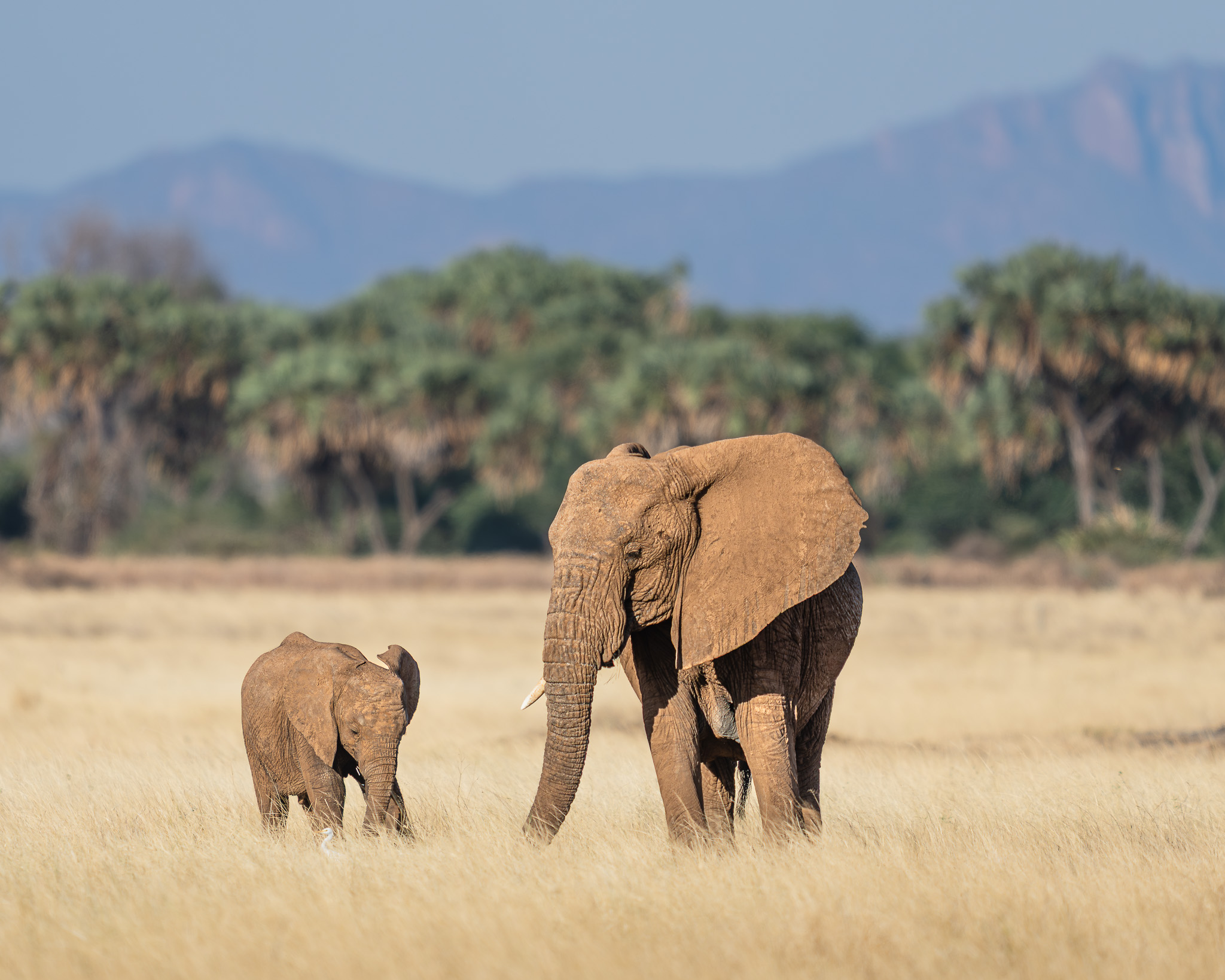
Our guides had all sorts of fun facts for us, the most surprising to me was elephants having a dominant tusk they preferred to use, almost like a human being left- or right-handed. The guides masterfully placed us in positions where we would have great viewing angles of the elephants without impeding where they were headed (they were clearly on their way to cross the river in the distance).
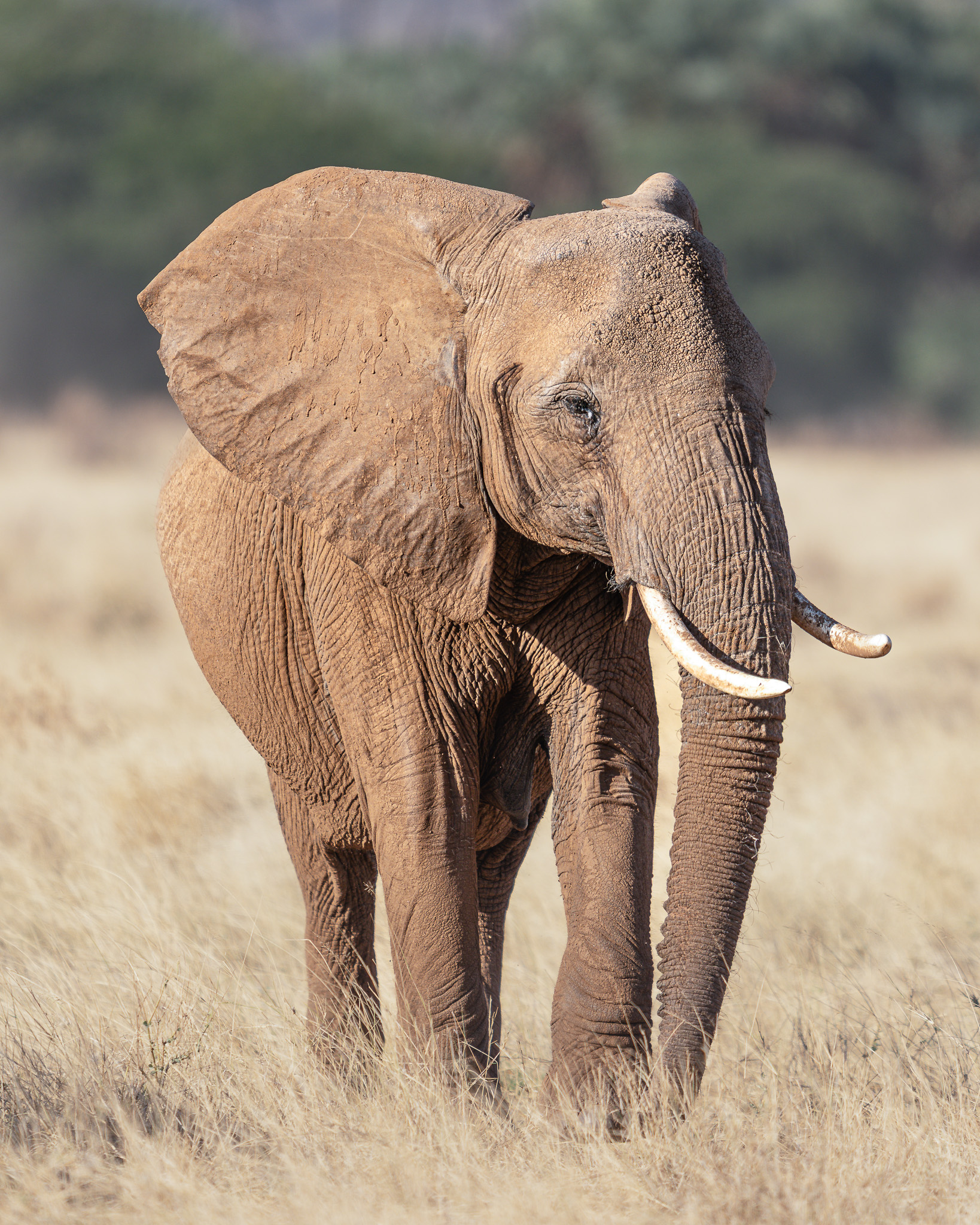
From a photography perspective, I tried to find compositions where the elephants we playing a role with the landscape around them, particularly these two enormous trees.
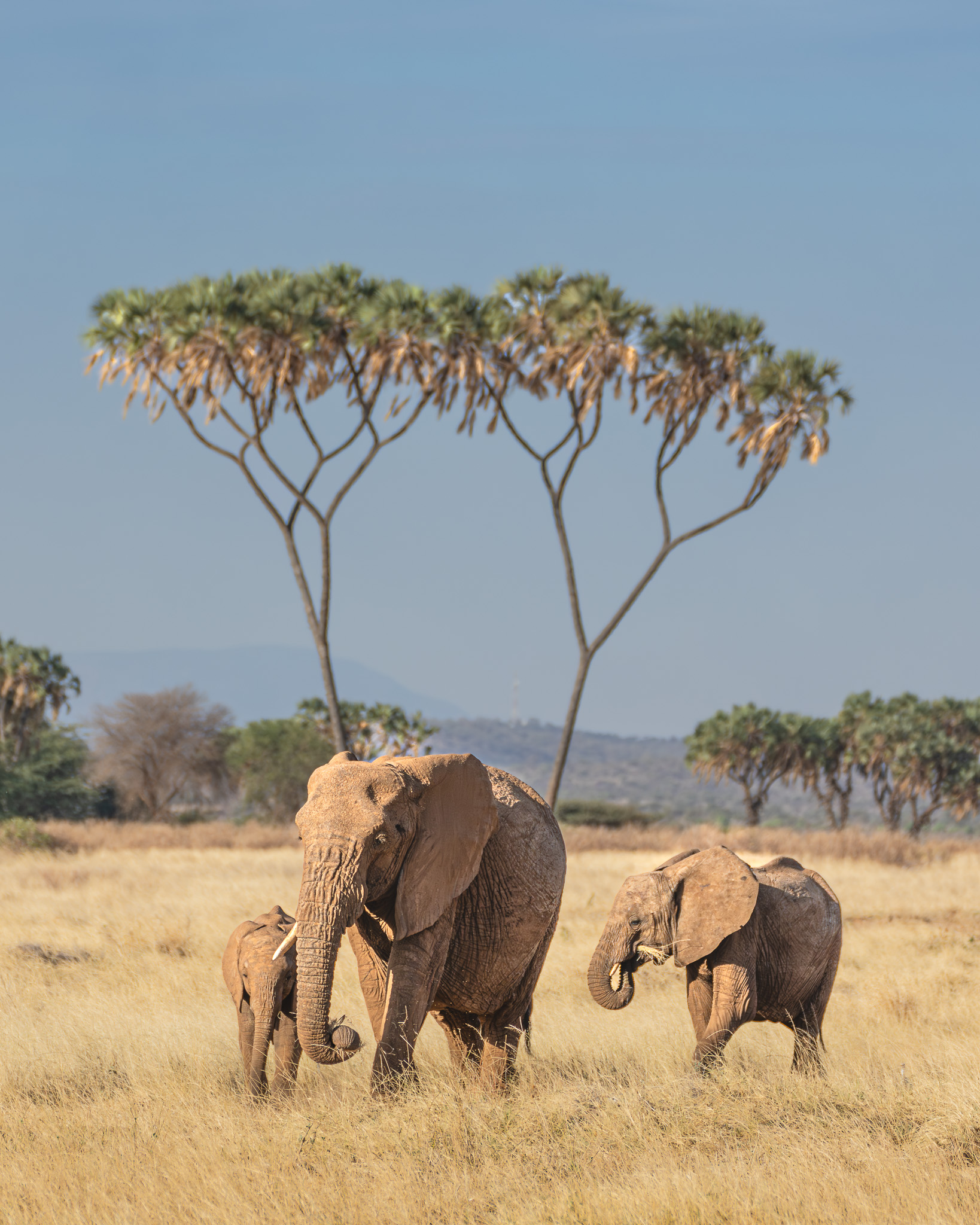
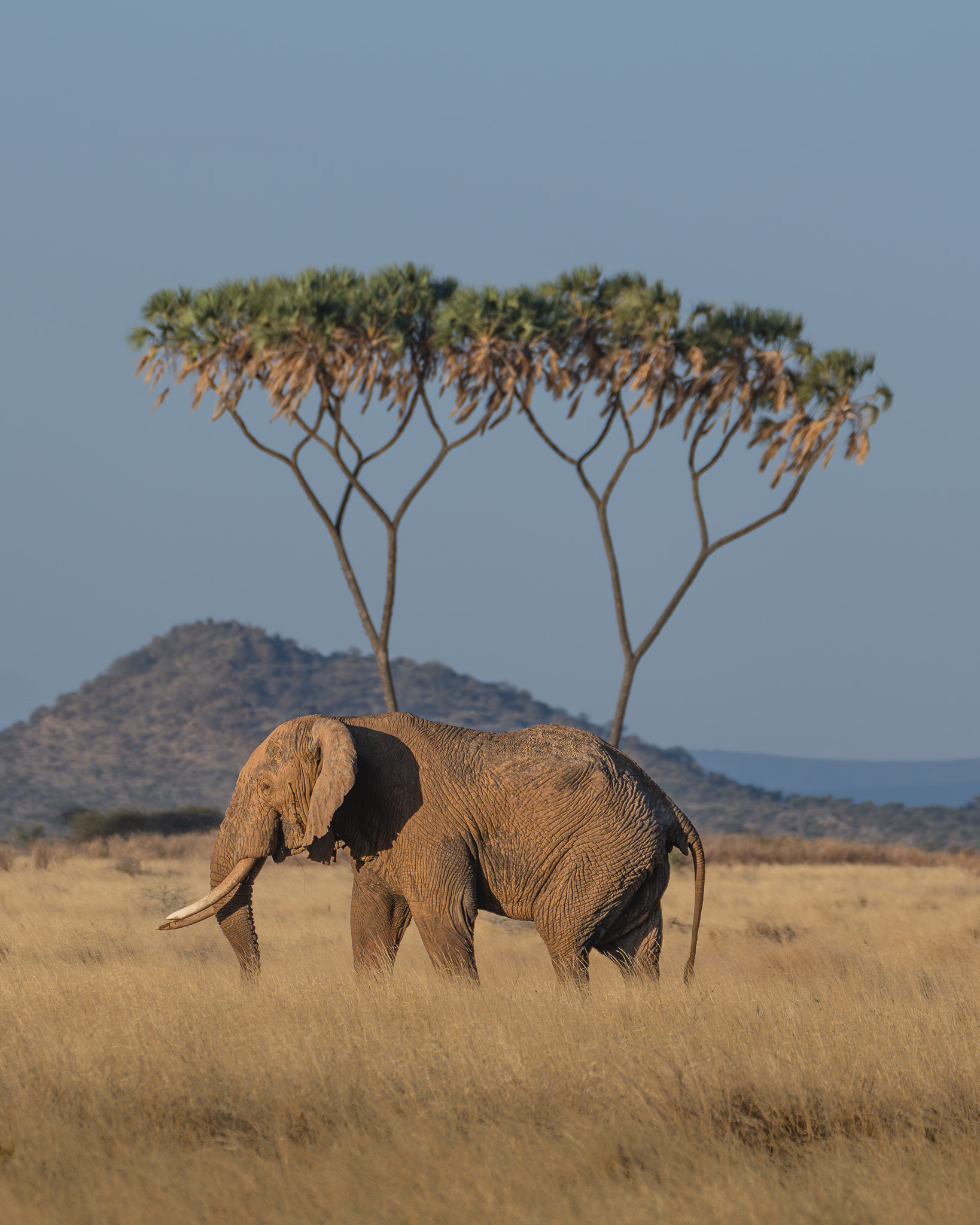
You’ll see the elephants with grass in their trunks, which they use to bring the grass to their mouths. They also eat soil and clay to aid in digestion. It was absolutely fascinating to see how much articulation they had with their trunks!
Like I mentioned above, the elephants did not seem bothered by our presence there, allowing me to get some great detail shots of a teenage elephant “posing” for us.
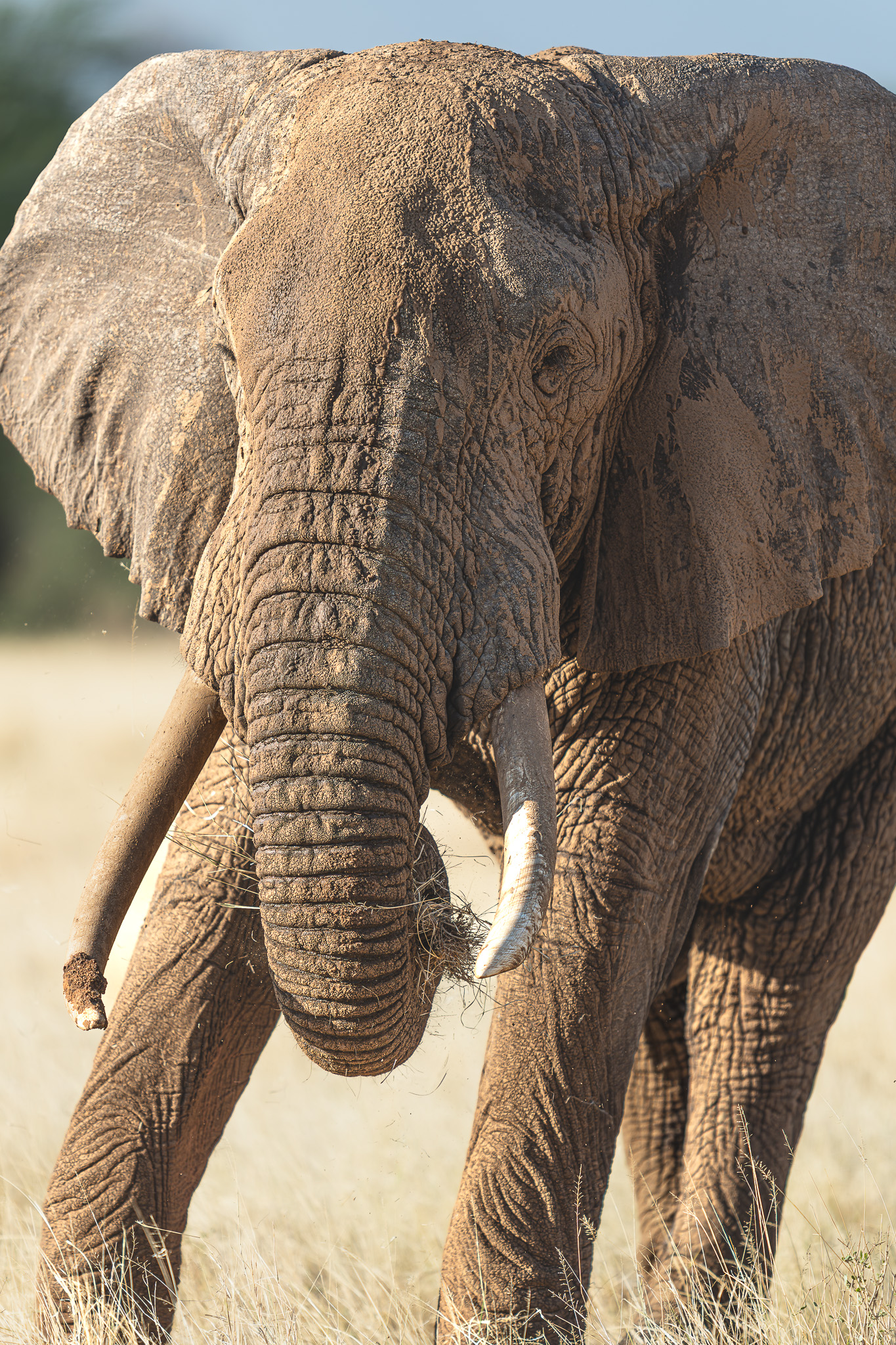
Something else we found out that was absolutely fascinating: elephants can communicate over long distances through, of all things, their feet. They have sensors there to detect ultra-low-frequency wavelengths and vibrations sent by other elephant families nearby to communicate with each other.
As the herd warmed up to our presence, some young elephants emerged from behind the safety of their mothers. There is little cuter in the world than a baby elephant, particularly because they do not have complete mastery of their trunk quite yet so they just kind of fling it everywhere.
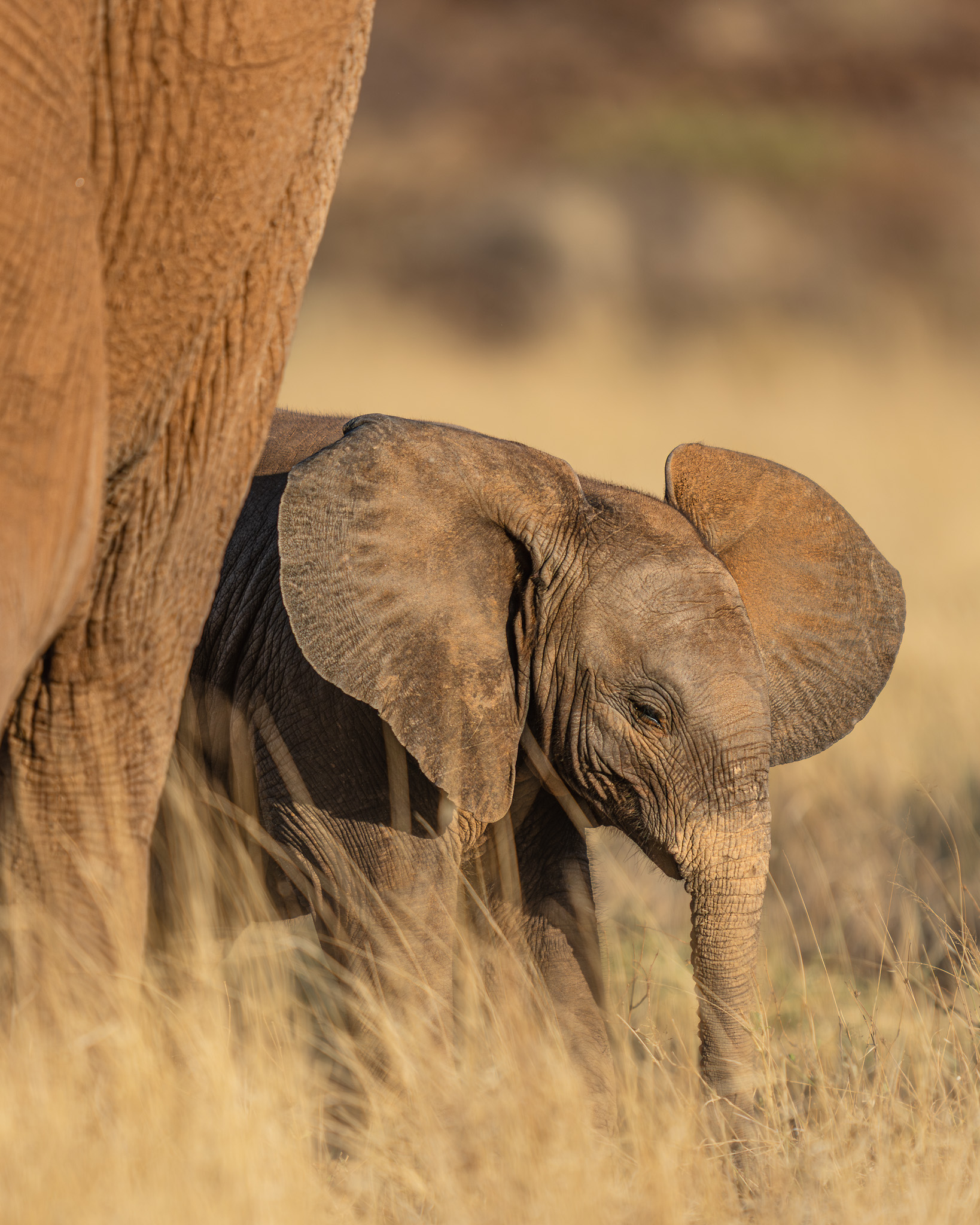
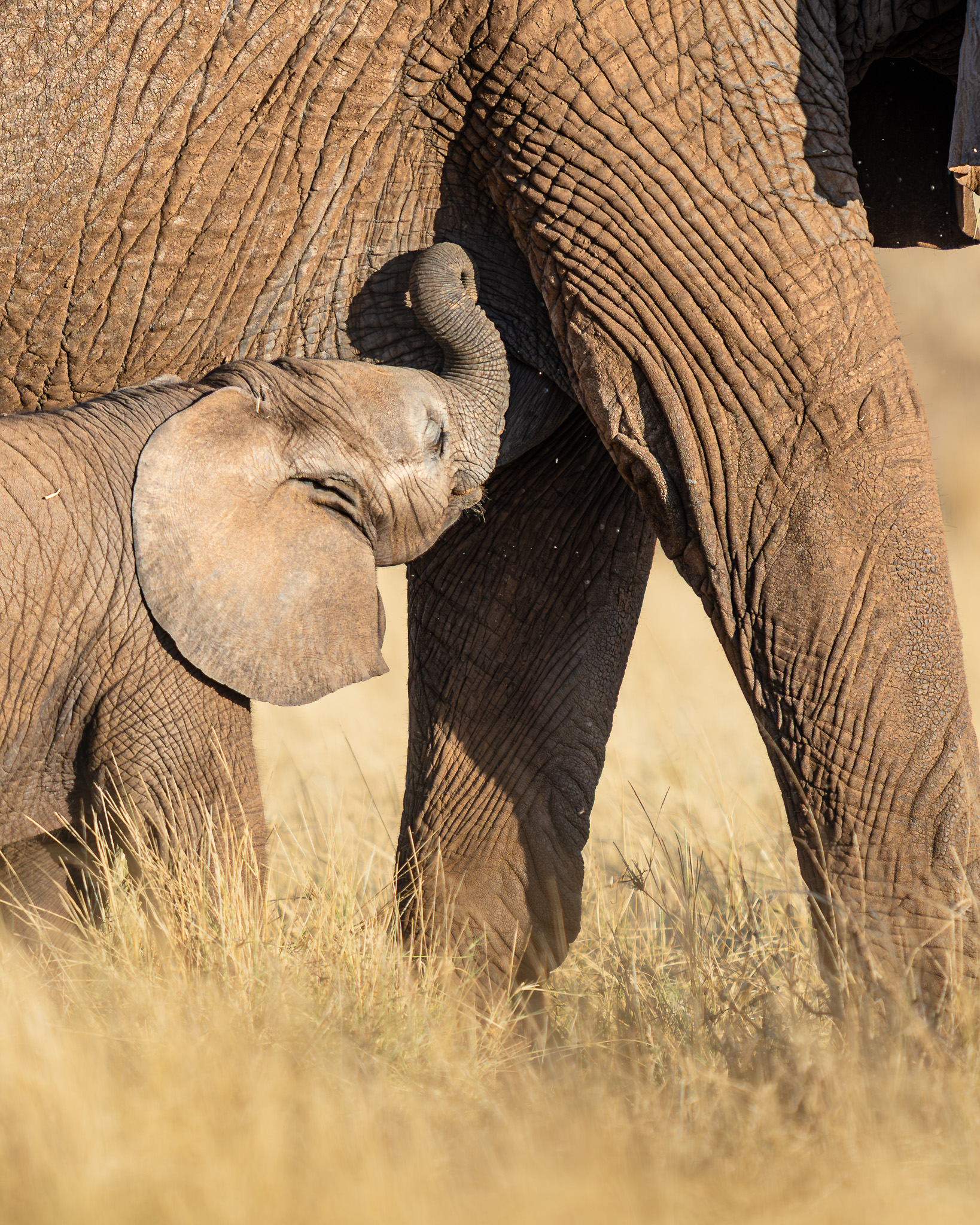
The calves would try and eat on their own but would constantly go back to their mothers to nurse as well.
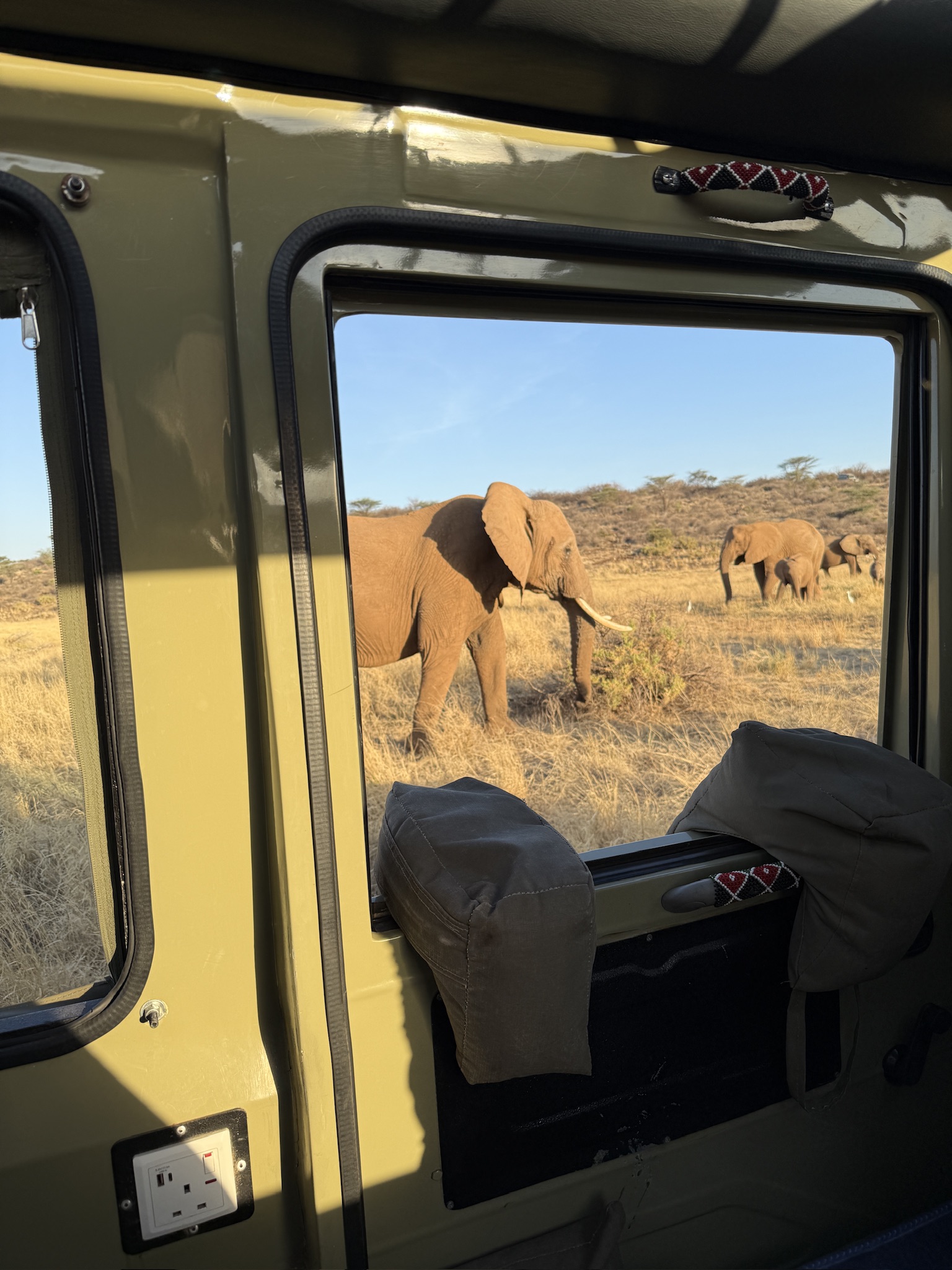
Now, I was using a big zoom lens to get up close and personal with these animals but I really didn’t need it, the elephants had no issues coming near the trucks. I took a regular picture from my iPhone to show just how close they were.
Eventually the elephants made it to the riverside, where we watched as they organized themselves for a safe river crossing. There is nothing safe about rivers in Africa, with heaps of Nile Crocodiles and hypotenuses of hippos near or in seemingly every river. It was fascinating to watch the elephants get lined up, especially around the little ones.
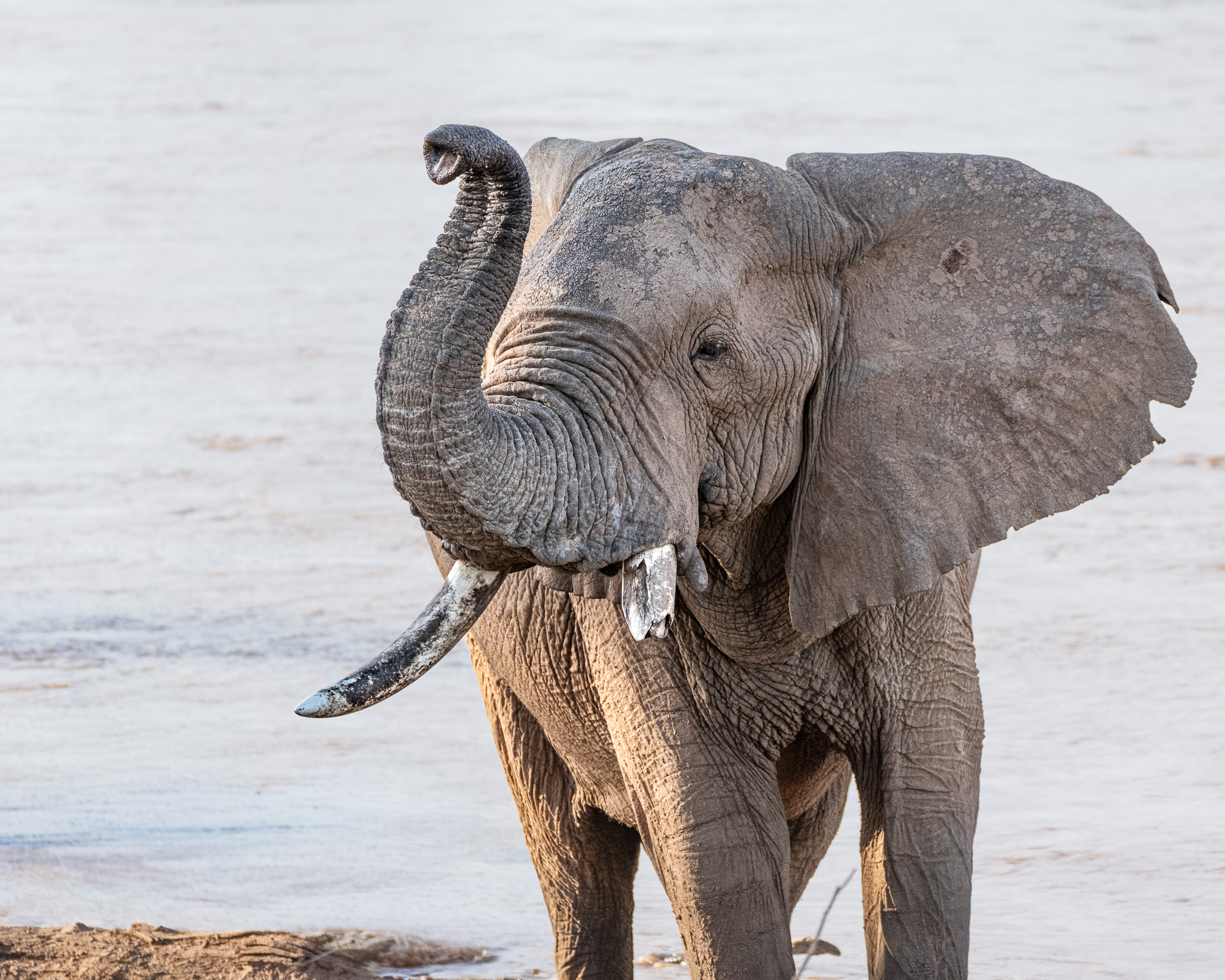
Finally, one-by-one they crossed the river safely, many grabbing a drink of water along the way.
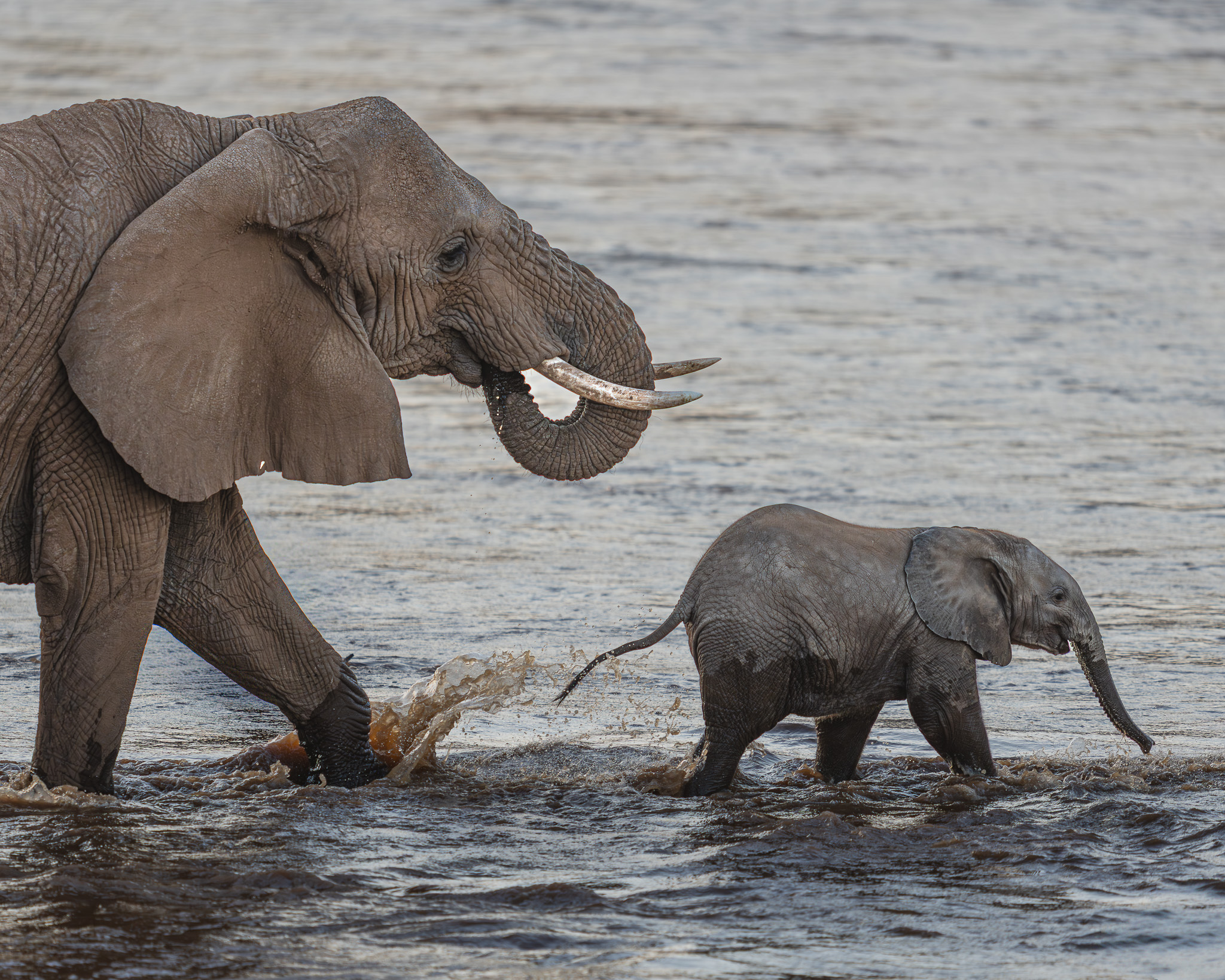
The other side of the river was another conservancy that we did not have passes to enter, so we bade farewell to the pachyderm family and set our eyes and hearts on other wildlife to come.
“Cheetah”
We quickly learned that when our guides told us to get back in our seats and drove with some zest, they had either seen something themselves or heard about it on the radio.
We weren’t far from it, just up a short but steep hill, and we saw her. I will never forget the beautiful orange eyes of a cheetah mother the first time I saw her.
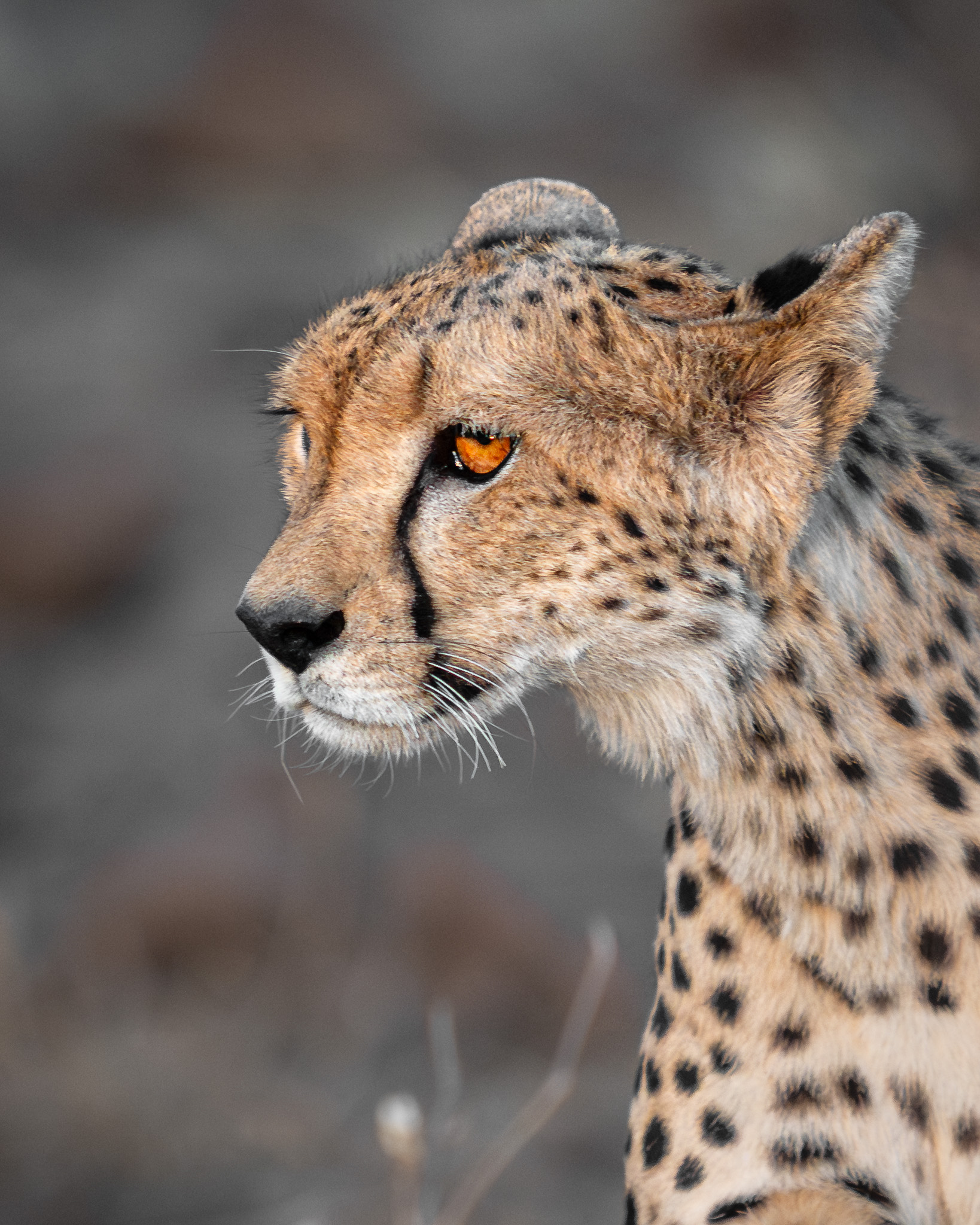
And it wasn’t just that we saw her, she ended up walking right past our truck! Not only that, SHE HAD CUBS!
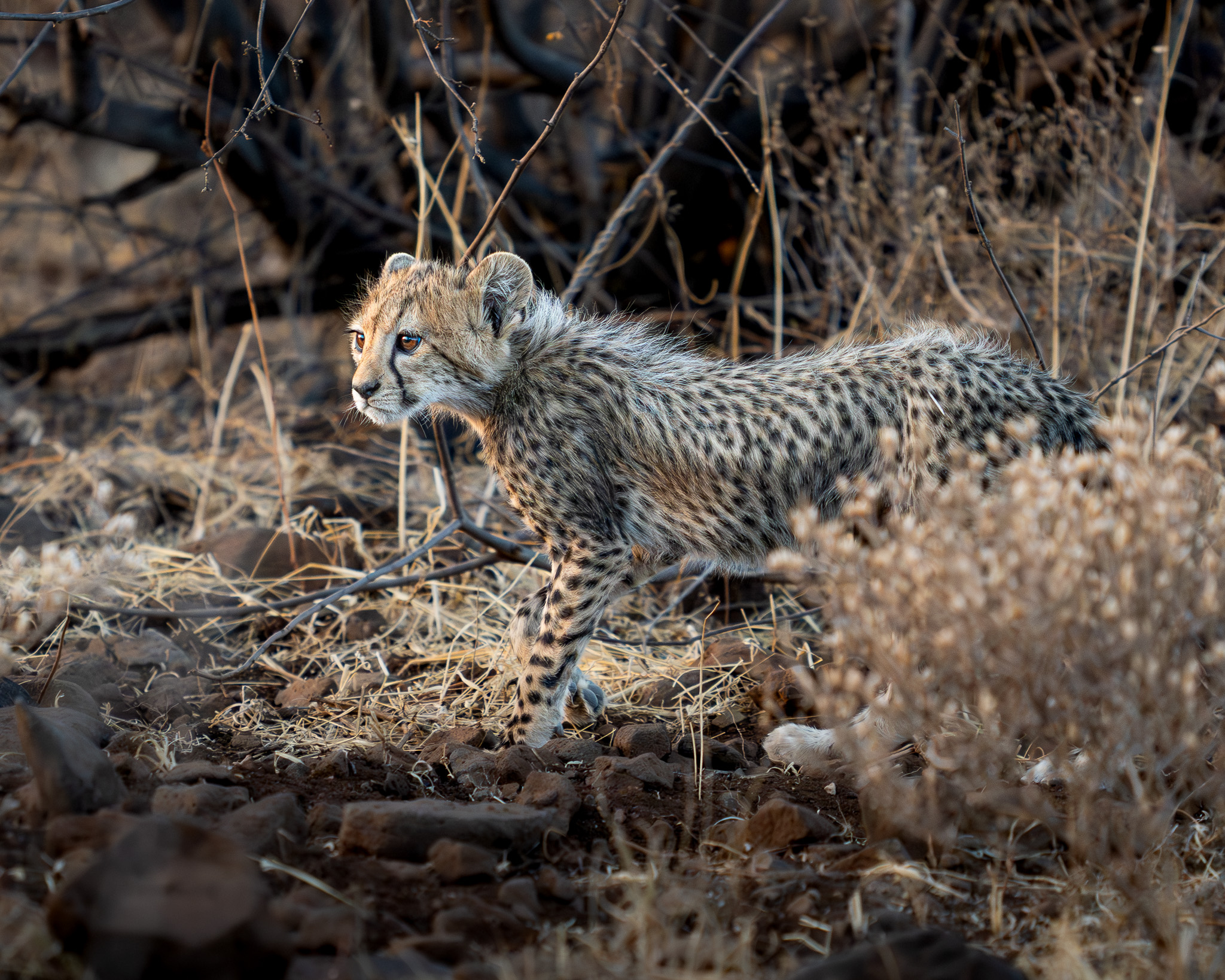
Having them pass maybe 20 feet from us was one of the most special feelings of my life, and fortunately it wasn’t the only time I would experience it on this trip. AND THEN ONE OF THE CUBS LOOKED RIGHT AT ME.
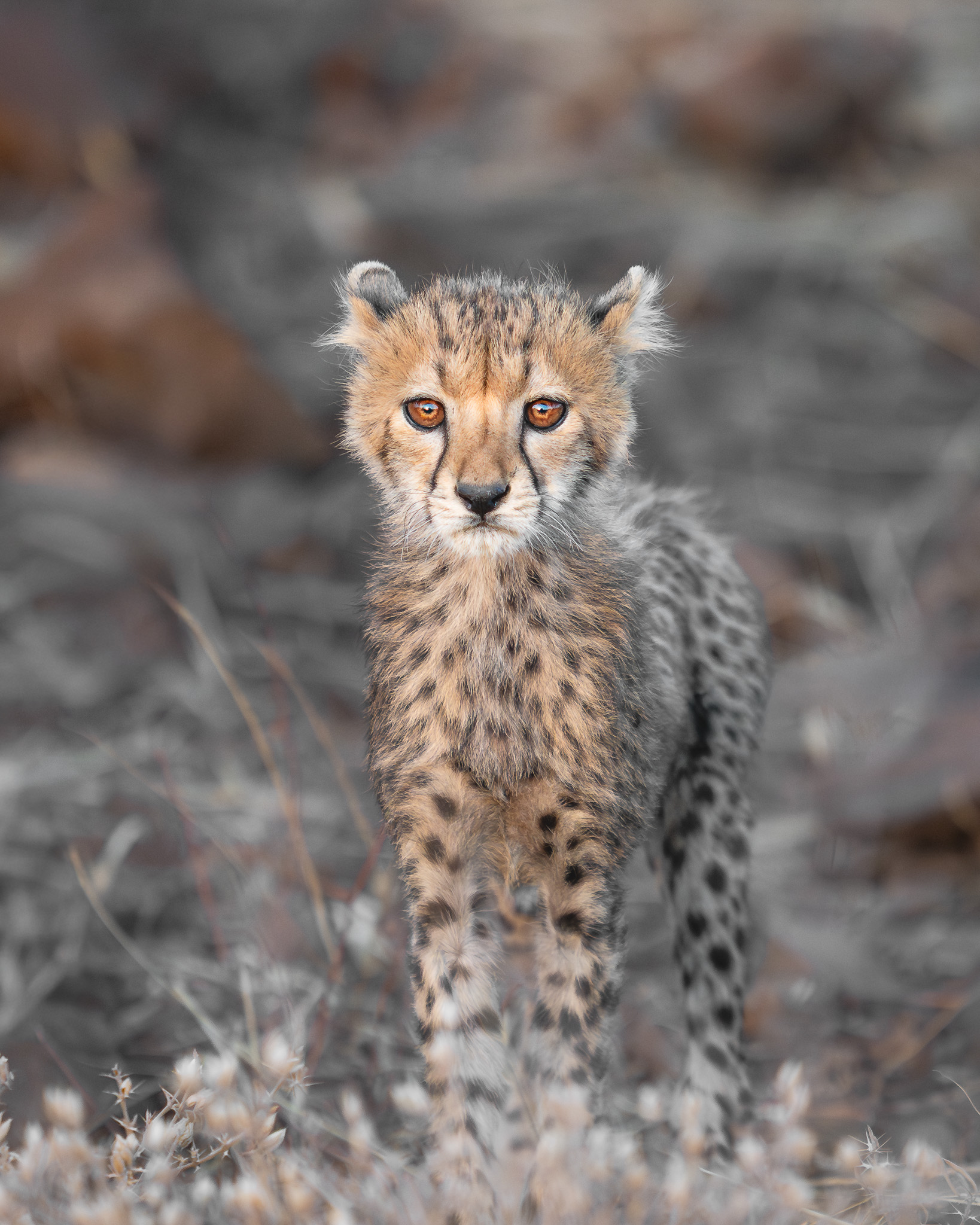
Day had turned to dusk and dusk was quickly turning into night. We positioned our trucks where we felt the cheetah family may have been heading (at the bottom of the hill, if you’re keeping track). We couldn’t see the mother so we thought she had stopped. She had, but luckily my Sony 400mm f2.8 lens saw her. Sitting stoic, looking over the plain, for either a quick meal or a safe resting place for her family for the night. It was an incredible scene, and only after taking her photo did I see her cub looking out from behind her.
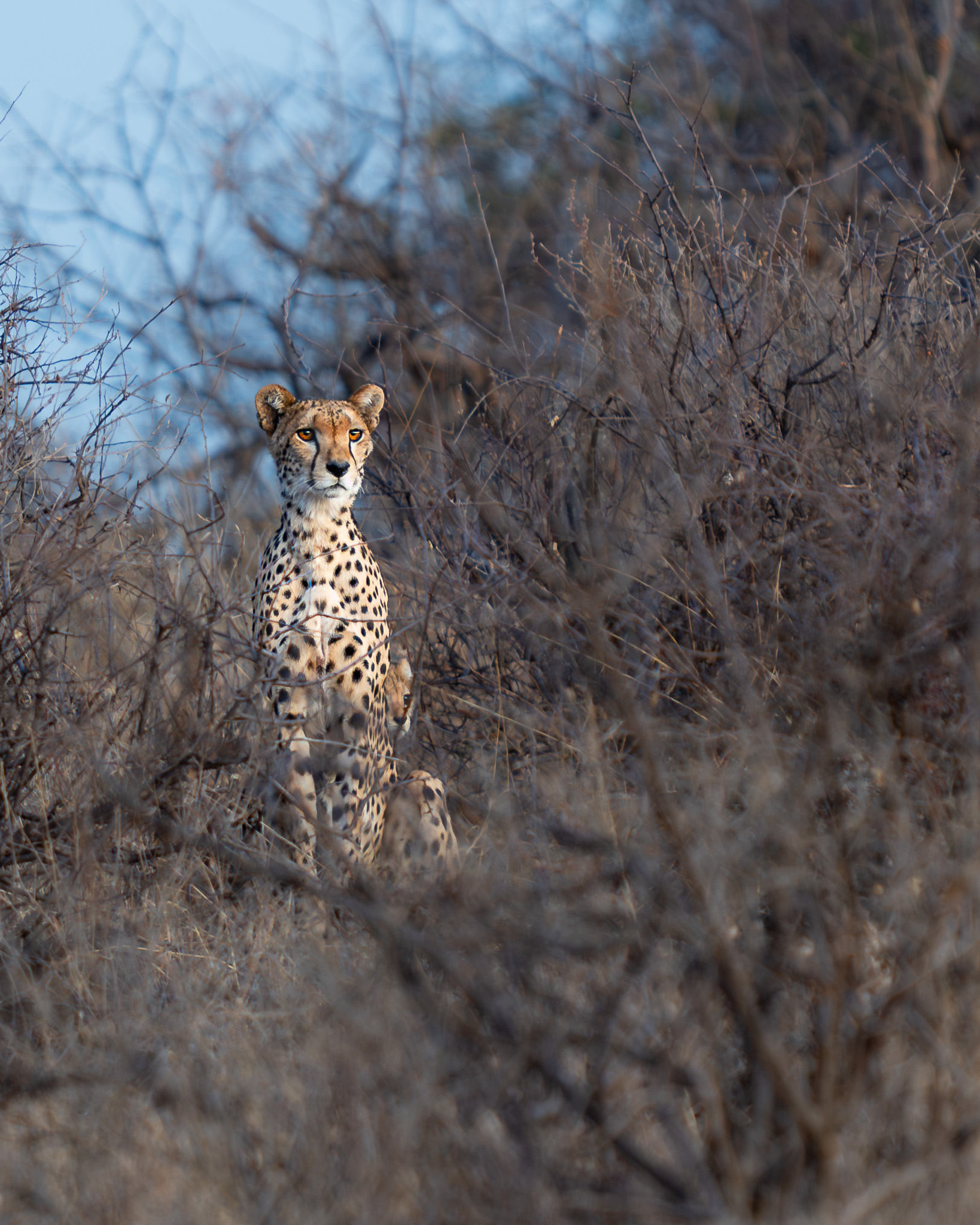
Opening Day was a success
We hurried back to the lodge to comply with curfew regulations, each of us breathless in speaking about how amazing our Opening Day was. We had a beautiful dinner where we each enjoyed our starters, and got ready for…well, the rest of the trip! Little did we know the adventure that would await us the next day but we would quickly fall into the rhythm of morning game drive -> evening game drive, with great food, great conversation, and plenty more photos of a lifetime to come!
What was your favorite photo? Tell me in the comments below!

The elephants in the river
Wow!! Great “story”. I’m not a photographer by any stretch of the imagination but it would be so cool to be on that safari.
BTW… I like your group namings!